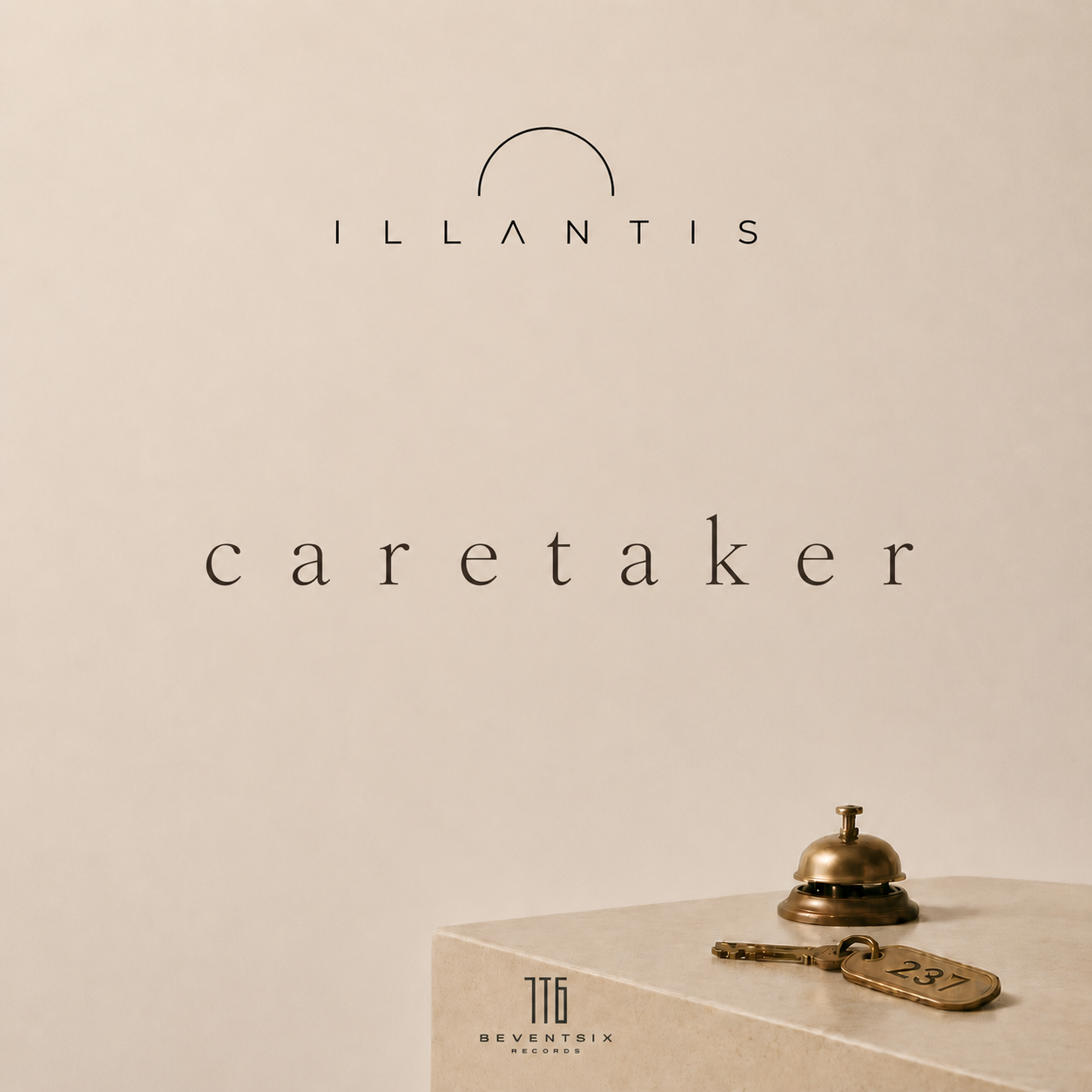
Caretaker
Lyrics
Good Evening.
Come on in.
Long night?
…
Yeah.
Thought so.
Drop your coat.
Grab a drink.
Take your time.
You’re good.
People don’t talk much
their first night.
Hey…
No pressure.
No rush.
Just breathe.
Leave that here.
Leave that here.
Hands up—
Let it disappear.
Leave that here.
Leave that here.
Everybody leaves
lighter here.
Leave…
Leave…
Leave…
Hey…
Found a wallet
last month.
Still got it.
No one’s asked.
Same with
the room key.
Happens more
than you’d think.
Guess people
don’t miss much
once they settle in.
You look better already.
Told you.
This place
does that.
Leave that here.
(Hey!)
Leave that here.
Hands up—
Let it disappear.
Leave that here.
(Hey!)
Leave that here.
Everybody leaves
lighter here.
Take a look around.
Go on.
See anybody
in a hurry?
…
Didn’t think so.
Leave that here.
Leave that here.
One more night.
That’s all.
Leave that here.
Leave that here.
We’ll take care
of the rest.
Quick question…
You remember
checking in?
…
Nah.
Nobody ever does.
Leave that here.
(Hey!)
Leave that here.
Keys.
Wallet.
Bad year.
Leave that here.
(Hey!)
Leave that here.
If you can’t hold it—
We’ll hold it here.
Behind The Song
With Caretaker, Illantis draws inspiration from one of horror literature’s most enduring works—Stephen King’s The Shining—without ever retelling its story.
Rather than referencing iconic imagery such as Room 237, REDRUM, or the Torrance family, the song explores the novel’s central psychological idea: the quiet surrender of identity.
In The Shining, the Overlook Hotel is far more than a haunted building. It functions almost like a living organism, patiently studying its guests, recognizing their weaknesses and gradually convincing them to give themselves away. The horror isn’t created through violence alone, but through seduction. The hotel never has to force anyone to stay—it simply becomes the place where leaving feels unnecessary.
That concept became the foundation of Caretaker.
The song imagines a caretaker who never threatens, never raises his voice and never lies. He simply welcomes people inside, offers them a drink, takes their coat and repeats one comforting phrase:
„Leave that here.“
At first, it sounds like everyday hospitality. Leave your coat. Leave your worries. Enjoy the night.
As the song unfolds, however, the meaning quietly shifts. The invitation begins to include memories, regrets and, eventually, identity itself. By the final chorus, the listener realizes that the caretaker has never been talking about luggage at all.
Musically, Illantis deliberately avoids the sonic clichés typically associated with horror. Instead of dark cinematic textures or industrial sound design, Caretaker embraces the warmth of Dark Disco, French Touch and Alternative Dance. A hypnotic four-on-the-floor groove, rubbery basslines, muted piano stabs and filtered analog synths create an atmosphere that feels welcoming rather than threatening.
That contrast is intentional.
The production invites the listener onto the dancefloor while the lyrics quietly suggest that no one is really leaving.
Throughout the song, ordinary observations replace traditional horror imagery: forgotten keys, abandoned luggage, rooms that somehow remain occupied, and conversations that seem perfectly normal until one detail feels slightly… wrong. This mirrors Stephen King’s storytelling approach, where fear often emerges from subtle distortions of everyday life rather than overt supernatural events.
Ultimately, Caretaker isn’t a song about ghosts or haunted hotels.
It’s about comfort.
About the temptation to let someone else carry your burdens.
And about how easily relief can become surrender when someone keeps telling you,
„Leave that here.“
Style
Dark Disco, French Touch, Alternative Dance, 122 BPM, A Minor, Immediate rubbery bass hook, iconic muted piano stab, filtered analog synth riff, four-on-the-floor groove, tight disco drums, shuffled percussion, warm analog bass, disco guitar chops, vintage polysynths, subtle clavinet, evolving counter melody, instrumental callback, filter automation, stereo expansion, breakdown to bass, kick and vocal only, explosive groove return, Natural conversational vocal, relaxed spoken phrasing, gang vocal hook, female octave harmonies in final chorus, rhythmic vocal chops, premium club mix, punchy low end, analog warmth, hypnotic groove, deceptive feel-good energy, unforgettable crowd hook, ‑darkwave, ‑sad ballad, ‑drill, ‑aggressive trap, ‑hard techno, ‑heavy rock, ‑metal, ‑orchestral drama, ‑gloomy atmosphere, ‑distorted lo-fi, ‑angry vocals
Release Info
Release Date:
Genre: Disco, Alternative, Dance
BPM: 122
Key: A Minor
Duration: 3:32